
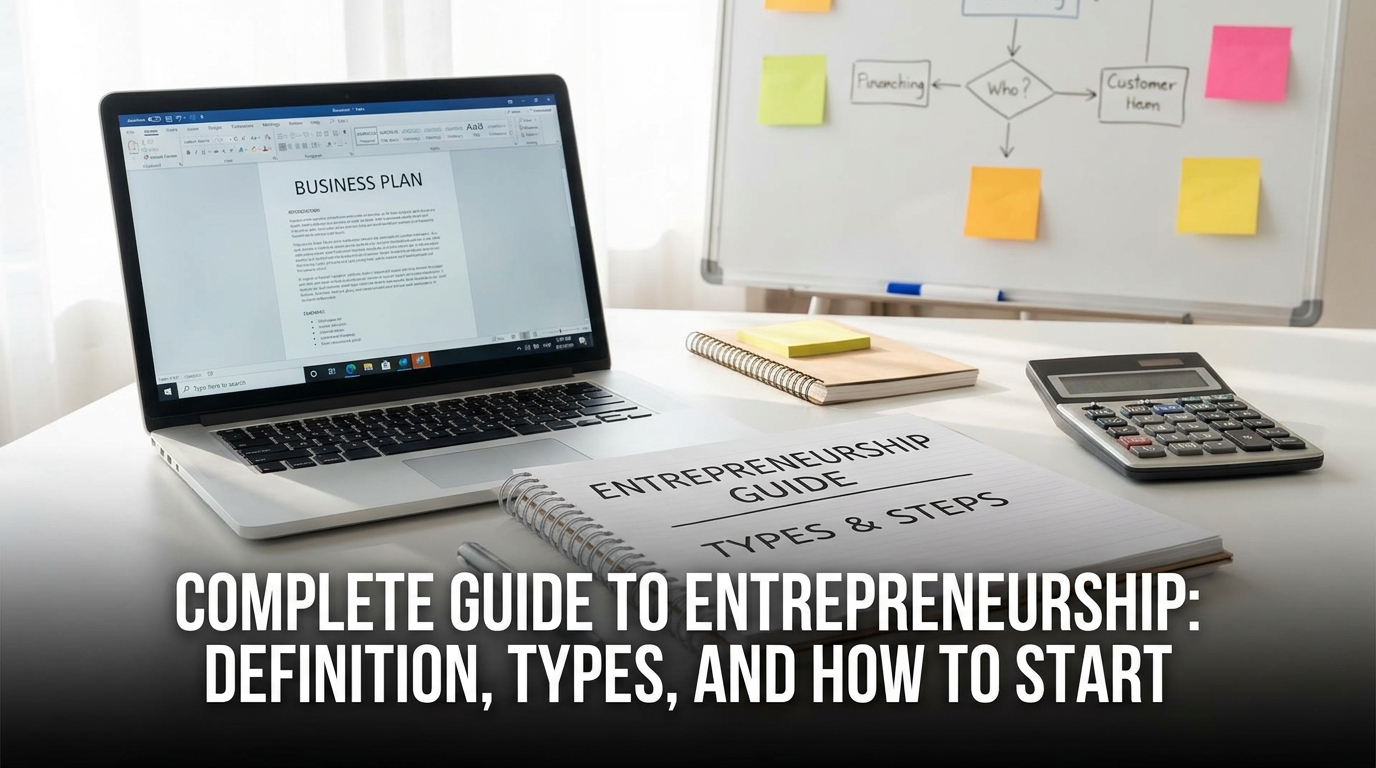
Complete Guide to Entrepreneurship: Definition, Types, and How to Start
The modern business world is driven by creative individuals who dare to take significant risks to transform innovative ideas into reality with high economic value. The term entrepreneurship is often misunderstood as merely starting a small trading company without grasping the deep essence of this value-creation process. In reality, this activity involves a visionary mindset capable of identifying opportunities amidst a highly dynamic market uncertainty. For context, the existence of these creative entrepreneurs serves as the primary engine of global economic growth as well as the creator of new job opportunities for the broader community according to global economic research. Interestingly, anyone can learn the basic principles of this business creation, provided they possess strong determination, high discipline, and a willingness to continuously learn from every failure experienced in the field.
Key Characteristics of a Successful Entrepreneur

Building a sustainable business initiative demands a specific set of mental traits and characteristics that set entrepreneurs apart from typical office workers. The courage to take calculated risks forms the most vital foundation, as every business decision is constantly shadowed by the potential for real financial loss in the future. Meanwhile, high-level creativity is essential for developing unique solutions to real problems faced by consumers in the market. A relentless spirit is also absolute, ensuring that an entrepreneur does not easily collapse when facing administrative hurdles or unexpected economic crises. Compared to conventional individuals, those involved in entrepreneurship tend to possess a much higher level of mental flexibility when responding to shifting global trends.
Various Types of Entrepreneurship in the Modern Business World
The form of business creation activity is highly diverse and can be classified into several main categories based on scale and purpose within society. Independent small businesses dominate the local market through the establishment of grocery stores, family restaurants, or professional service firms serving nearby communities. On the other hand, tech-based ventures or startups focus on exponential growth through globally scalable digital product innovations. The field of social entrepreneurship is also growing rapidly as it combines profit-generating motives with a noble mission to solve social issues in society. Furthermore, corporate innovation exists as an application of the entrepreneurial spirit within established, large-scale corporations.
Practical Steps on How to Start a Business from Scratch
Starting a business from an abstract idea to a profitable business entity requires a detailed, structured, and systematic operational roadmap. The initial step begins with identifying unresolved market problems that existing products or services have failed to address effectively. After finding this market gap, entrepreneurs must design a mature business model that clearly outlines revenue streams and specific target consumers.
Product Testing and Strategic Cash Flow Management
The next phase involves building a product prototype or testing a service to gather direct feedback from potential buyers before mass production begins. As a recommendation, cash flow management must be closely monitored from the first day of operations to prevent the business from facing early bankruptcy due to financial miscalculations. For long-term sustainability, entrepreneurs must adopt effective contemporary business development strategies.
Essential Skills Every Entrepreneur Must Master
Running a business independently requires mastering a range of technical and non-technical skills so that operations run smoothly, effectively, and efficiently. Effective communication skills are essential when negotiating with investors, convincing prospective customers, and harmoniously leading internal teams. Time management and task delegation also play a crucial role in keeping business owners from getting trapped in exhausting daily operational work. Financial data analysis skills help decision-makers read profit-and-loss statements accurately without relying solely on assumptions. In addition, emotional intelligence serves as a major asset in resolving internal conflicts and maintaining healthy relationships with business stakeholders.
Common Challenges Faced by Entrepreneurs
The journey of building a business is never free from complex obstacles that test the mental and financial resilience of its founders over time. Limited initial capital often becomes the primary stumbling block for beginners who do not yet have broad access to formal banking finance institutions. On the other hand, fierce competition with established players who possess large capital demands far more creative and efficient marketing strategies. Unpredictable fluctuations in market demand also serve as a source of constant stress, requiring high sensitivity toward changes in daily consumer behavior. Navigating these dynamics demands mental composure and rapid adaptability to keep the business afloat amidst economic crises.
Charting Your Path Forward: Final Reflections on the Entrepreneurial Journey
Grasping the deep essence of entrepreneurship offers a fresh perspective on how a simple idea can transform the modern economic landscape. This long journey demands boundless commitment and the courage to continuously transform in the face of an increasingly competitive era. Take concrete steps today to turn your dream business idea into a well-measured and directed action plan. Turn every obstacle into a valuable stepping stone toward long-term, sustainable business success.
Essential Answers & Expert Insights for Aspiring Founders
What is the basic definition of entrepreneurship?
This concept pertains to the complete process of designing, launching, and running a new enterprise, which typically begins as a minor startup project focused on value creation.
Why is adaptability so important for entrepreneurs?
Adaptability enables entrepreneurs to respond rapidly to evolving market preferences and stay resilient when navigating unexpected economic disruptions.
Is large financial capital a main prerequisite to starting a business?
While capital is helpful, a brilliant idea, strong execution, and mental persistence are far more decisive factors in the early success of any venture.
How do you test the viability of a business idea before execution?
An idea can be tested by creating a simple minimum viable product (MVP) or prototype and conducting direct market research to gauge actual consumer demand.
What is the main difference between an entrepreneur and a regular employee?
An entrepreneur directly assumes financial and operational risks to build an independent asset, whereas an employee receives fixed compensation based on an employment contract.