Business Plan Definition Structure and How to Write One
Taking your first steps into the business world often feels overwhelming without a clear roadmap. Many founders fail in their first year simply because they execute ideas without careful calculations. That is precisely where a solid business plan proves invaluable. This document is far more than a mere formality for raising funds; it serves as a strategic roadmap that defines your operational direction, financial stability, and long-term growth trajectory.
Creating a robust planning framework requires a deep understanding of market dynamics, funding, and execution. Whether you are exploring how to start a small business or building a scalable enterprise, this guide breaks down how to structure a realistic, actionable, and investor-ready roadmap.
Why Strategic Planning Is Essential for Business Foundations

Many novice entrepreneurs get trapped in product euphoria without considering long-term sustainability. A structured roadmap minimizes failure risks by testing core assumptions before real capital is committed. Through this process, founders are forced to analyze competition, understand target profiles, and calculate break-even points accurately.
Having a complete document also streamlines external communication. Financial institutions, potential partners, and investors require concrete proof that your business model holds a competitive edge. Without empirical data and clear financial projections, even the most innovative ideas will struggle to secure financial backing.
Essential Components of a Complete Business Plan
Developing a standard business plan template requires including several core elements. Each component connects directly to the next, building a cohesive and persuasive strategic narrative.
Executive Summary
This section sits at the forefront and is the most frequently reviewed part by investors. The executive summary covers the main aspects of the venture, like the problem that needs solving, the solution we’re offering, the chances in the market, and some overall financial numbers. Although it appears first, write this section last so that every data point is accurately captured.
Company Description and Value Proposition
Detail your business identity, vision, mission, and core product advantages. Clearly state the unique attributes that set your offerings apart from existing competitors. Emphasizing a compelling Value Proposition gives prospective customers a clear reason to choose your brand over rival market players.
Market Analysis and Marketing Strategy
Do a detailed study of the market size, what’s happening in the industry, and how competitors are acting. Clearly identify your Target Audience based on demographic and behavioral insights. Once this data is organized, build a marketing strategy that encompasses pricing models, distribution channels, and promotional tactics to capture market share.
Operational Plan and Organizational Structure
Detail how the company functions on a daily basis. The operational plan covers facilities, equipment needs, supply chain logistics, and production workflows. Include an organizational chart showcasing key management roles to demonstrate that the company is led by capable hands.
Financial Projections and Cash Flow Management
Financial figures form the core of your strategic proposal. Present realistic revenue estimates, income statements, and cash flow statement projections covering three to five years ahead. Investors look for grounded calculations rather than inflated numbers lacking logical foundations.
Building a Lean Canvas for Agile Execution
For early-stage startups, drafting a lengthy document can take up too much time. As a streamlined alternative, founders can utilize a Lean Canvas. This model condenses core elements into a single-page layout focused on problems, solutions, key metrics, and competitive advantages.
Adopting this lean framework allows founders to validate assumptions rapidly in the field. Once the underlying assumptions prove successful and generate initial traction, you can expand it into a comprehensive document.
Step-by-Step Guide How to Write a Business Plan
Drafting your document requires a structured workflow to ensure no critical details are overlooked. Here is a practical, step-by-step process on how to write a business plan effectively.
The initial phase begins by gathering objective market data. Avoid relying on personal assumptions when estimating market potential. Use public research data or official guidelines from organizations like the SBA to follow widely accepted standards.
Next, evaluate strengths, weaknesses, opportunities, and threats using a SWOT Analysis framework. This analytical approach helps you build both defensive measures and aggressive growth strategies for competitive markets.
Afterward, construct detailed financial models. Ensure these figures accommodate both best-case and worst-case scenarios so that your leadership team remains prepared for market shifts.
Once all technical drafts are complete, synthesize these details into a clear executive overview. Review the entire document carefully to maintain consistent phrasing, professional tone, and clear readability throughout.
Common Pitfalls in Financial Forecasting
One of the most frequent errors in strategic planning lies in overly optimistic financial estimates. Founders often overlook hidden expenses such as customer acquisition costs, tax liabilities, or asset depreciation.
Another frequent misstep is blending personal expenses with business operations. Without clear boundaries, financial analysis becomes skewed and threatens cash flow stability down the line. Ensure that each projected number is based on clear and reasonable calculations.
Practical Business Plan Example Structure
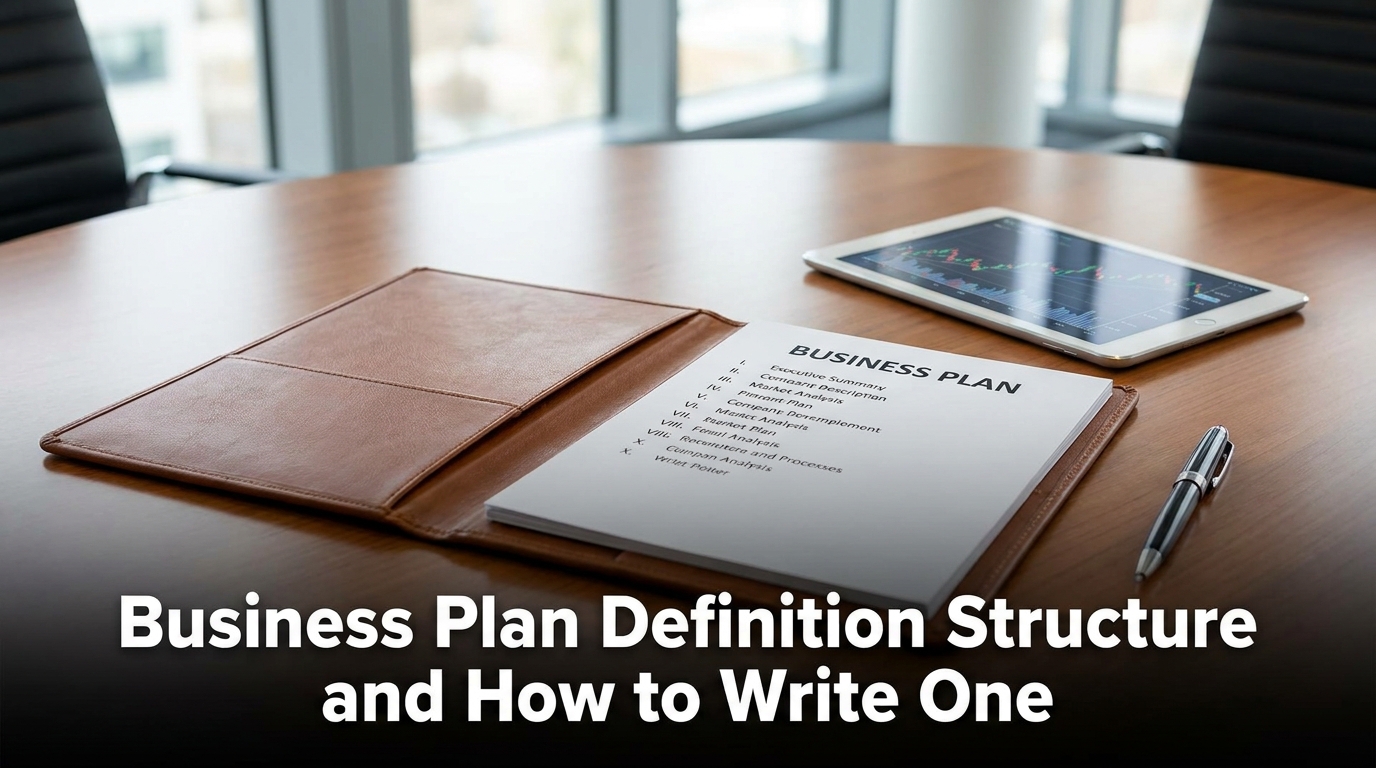
To provide a clear visual outline, here is a practical business plan example commonly used by emerging startups and expanding companies.
1. Executive Summary
– Company Vision and Mission
– Product/Service Overview
– Funding Requirements
2. Market & Competitive Analysis
– Market Segmentation
– Competitor Profiles
– Competitive Advantage
3. Operational & Marketing Strategy
– Marketing and Sales Strategy
– Production Workflow and Locations
– Core Management Team
4. Financial Statements & Projections
– Start-up Costs Analysis
– Profit & Loss Projection
– Cash Flow Statements
This outline adapts easily to your specific operational scale. As business complexity grows, you can expand each section with relevant data and technical details.
Evaluating and Updating Your Business Strategy
A well-crafted plan is not a static document destined to sit on a shelf. Market conditions, technological shifts, and customer behaviors change constantly over time. Consequently, founders should review and refine their overarching business strategy every six to twelve months.
Regular updates keep day-to-day operations aligned with market realities. Treat your documentation as a dynamic guide that evolves alongside your company as it scales toward larger market opportunities.
Frequently Asked Questions
What Is the Ideal Length for a Business Plan?
Document length depends entirely on purpose and business complexity. For internal use or early-stage validation, a concise 3 to 5 page summary often suffices. However, for bank loan applications or venture capital presentations, comprehensive plans typically range between 15 and 25 pages.
Do Small Businesses Need a Written Strategy Document?
Yes, every business venture benefits from clear strategic planning. Even in a simplified format, writing down your plan helps owners track expenses, set sales targets, and avoid costly operational missteps.
How Often Should You Update Your Strategy Document?
Plans should be updated whenever significant operational shifts occur. Key triggers include launching new product lines, entering geographical markets, adapting to regulatory changes, or seeking new investment capital.
How Does a Lean Canvas Differ from a Traditional Plan?
A Lean Canvas emphasizes quick hypothesis testing, core customer problems, and immediate solutions on a single page. Conversely, traditional plans provide deep dives into organizational structures, exhaustive market analyses, and multi-year financial forecasts.
How Do You Estimate Financials for a New Venture?
You can construct estimates by evaluating industry benchmarks and targeted market research. Map out all fixed and variable costs, then project sales volume based on realistic market averages to determine achievable financial targets.